Furnace not heating
Airflow, controls, ignition or a safety shutdown can all leave a home without heat. Record whether the blower runs and whether the thermostat is requesting heat; a symptom alone does not identify the failed part.

FURNACE REPAIR IN NEWARK, DE
Discover helpful furnace repair insights for Newark, Delaware, where changing winter weather conditions emphasize the importance of regular equipment upkeep. Understand frequent heating breakdowns, blower motor performance checks, electrical connections, and critical home safety measures. Use this local guide to diagnose heating malfunctions and plan informed conversations with licensed independent heating contractors.
Speak To a Specialist
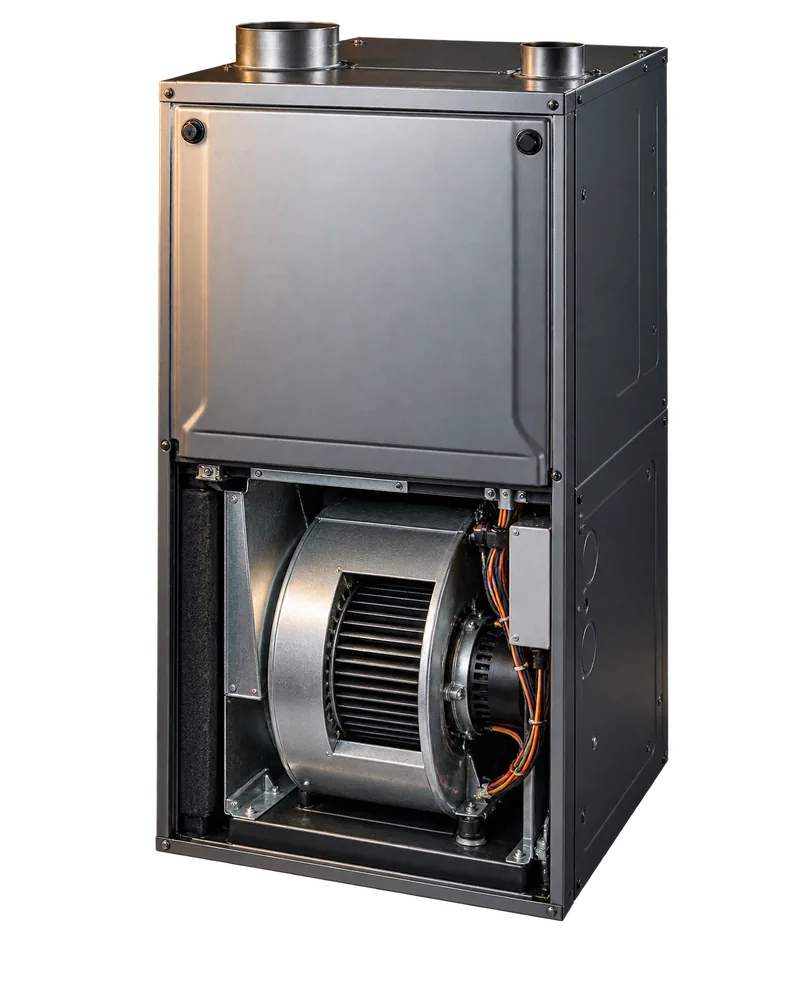
A CLEARER LOCAL START
A furnace that will not heat, keeps stopping or sounds different needs a clear diagnosis before a repair decision.
Newark's building permit application directs owners to consult the New Castle County parcel record when determining whether to apply to the city or county.
Use the official parcel and city information route with the actual property address. Ask which authority should receive the proposed work and supporting documents; a postal city name alone does not settle jurisdiction. Keep the diagnostic findings and equipment proposal available, and leave internal furnace work to a qualified professional.
We are an independent referral resource, not the contractor performing repairs. A provider must confirm the work offered, price and schedule. This draft does not arrange service. How the referral model works
Official information route checked 2026-10-29. Newark Delaware, not New Jersey No postal ZIP association treated as legal jurisdiction or buyer coverage Official application retained; no processing times or permit-price claims repeated
MAKE SENSE OF THE SYMPTOMS
The symptoms below are general diagnostic topics. Neither the nearby station normal nor an ACS estimate identifies the cause of an individual furnace problem.
Airflow, controls, ignition or a safety shutdown can all leave a home without heat. Record whether the blower runs and whether the thermostat is requesting heat; a symptom alone does not identify the failed part.
A failed heating start needs professional assessment of the ignition sequence and safety controls. Do not repeatedly reset the furnace, bypass a control or attempt work on gas or combustion components.
Frequent starts and stops can have several causes, including control or airflow problems. Note the pattern and any visible fault message so a technician can investigate instead of guessing from the cycle alone.
Reduced air at the registers can involve the filter, blower or distribution system. Follow the equipment manual for routine user maintenance; leave internal electrical and mechanical testing to a qualified professional.
A new rattle, squeal or repeated banging is worth documenting. Describe when the noise occurs and stop using equipment that appears unsafe. Do not remove panels or reach into moving equipment.
A thermostat display, wiring fault or control issue can resemble a furnace failure. Record the settings and displayed messages. A provider should test the system before recommending a control or appliance replacement.
SEVEN GLOBAL SERVICE GUIDES
Seven global guides to help explain the system or symptom. A guide is not a claim of verified local service availability.
Know which warning signs need urgent professional attention and when to leave your home.
Learn MoreUnderstand ignition, airflow, and heating issues in a gas furnace.
Learn MoreLearn about heating elements, sequencers, and electrical controls.
Learn MoreExplore possible reasons for cool air or a furnace that will not start.
Learn MoreUnderstand failed starts, repeated clicking, and ignition lockouts.
Learn MoreCompare repair options, system condition, and replacement considerations.
Learn MorePrepare questions about inspections, filters, and routine furnace care.
Learn MoreSOURCED CONTEXT · CLEAR LIMITS
Heating context helps plan care; it does not diagnose a furnace.
The nearest retained NOAA station in this project's model is USW00013781, 13.4 km from the Census reference point for Newark. Its 1991-2020 normal is 4,646.7 heating degree days at base 65°F.
This is a station-based proxy, not an observed city or household measurement. Straight-line distance, elevation differences and microclimates limit its representativeness. It does not establish furnace ownership, failure rates or service coverage.
For a Newark Delaware heating project, the source adds a practical boundary check: city and county application routes are not interchangeable. This administrative distinction does not identify the home's heating system, current furnace condition or a verified service ZIP.
| Heating Fuel Type | Occupied Households (90% MOE) | Estimated Share (%) |
|---|---|---|
| Utility Natural Gas | 4,774 ± 359 High Reliability | 55.6% ± 3.29% |
| Bottled / LP Propane Gas | 131 ± 75 High Uncertainty (CV > 30%) | 1.5% ± 0.87% |
| Electricity | 2,995 ± 432 High Reliability | 34.8% ± 4.76% |
| Fuel Oil / Kerosene | 651 ± 169 Moderate | 7.6% ± 1.93% |
| Wood / Biomass | 11 ± 14 High Uncertainty (CV > 30%) | 0.1% ± 0.16% |
| Solar Energy | 0 (none reported in sample) ± 27 | 0% ± 0.31% |
| Other Fuel | 32 ± 35 High Uncertainty (CV > 30%) | 0.4% ± 0.41% |
| Coal or Coke | 0 (none reported in sample) ± 27 | 0% ± 0.31% |
| No Fuel Used | 0 (none reported in sample) ± 27 | 0% ± 0.31% |
| Total Occupied Housing Units | 8,594 ± 399 High Reliability | 100.0% |
Source: U.S. Census Bureau 2020-2024 5-Year ACS Estimates (Table B25040: House Heating Fuel). Plurality heating fuel: Utility Natural Gas.
Statistical Confidence Note: All estimates include published 90% confidence margins of error (± MOE). Derived percentage uncertainty calculated per official Census Bureau proportion formulas. Categories flagged with High Uncertainty (CV > 30%) reflect smaller localized sample counts and should be interpreted as general approximations.
| Structure Construction Era | Housing Units (90% MOE) | Estimated Share (%) |
|---|---|---|
| Built 2020 or later | 182 ± 113 High Uncertainty (CV > 30%) | 1.8% ± 1.14% |
| Built 2010 to 2019 | 899 ± 237 Moderate | 9.1% ± 2.35% |
| Built 2000 to 2009 | 832 ± 206 Moderate | 8.4% ± 2.04% |
| Built 1990 to 1999 | 1,784 ± 308 High Reliability | 18% ± 3% |
| Built 1980 to 1989 | 881 ± 214 High Reliability | 8.9% ± 2.12% |
| Built 1970 to 1979 | 1,569 ± 313 High Reliability | 15.8% ± 3.07% |
| Built 1960 to 1969 | 1,792 ± 328 High Reliability | 18.1% ± 3.2% |
| Built 1950 to 1959 | 1,186 ± 212 High Reliability | 12% ± 2.07% |
| Built 1940 to 1949 | 321 ± 115 Moderate | 3.2% ± 1.15% |
| Built 1939 or earlier | 475 ± 229 Moderate | 4.8% ± 2.3% |
| Total Residential Units | 9,921 ± 446 High Reliability | 100.0% |
Source: U.S. Census Bureau 2020-2024 5-Year ACS Estimates (Table B25034: Year Structure Built). Values reflect published 90% confidence margins of error.
Heating equipment operates under standard factory sea-level combustion specifications without specialized altitude orifice modifications.
KNOW WHAT TO NOTICE
Note room temperature, thermostat setting and whether warm air is moving.
Record the sequence without opening compartments or repeatedly resetting controls.
Describe affected rooms and whether the change is new; do not assume the cause.
Share a visible code or photo only if it can be read without removing panels.
Describe the change. Smoke, fire, suspected gas leaks and CO alarms require emergency safety action.
Keep service records and ask whether recurring symptoms have a common underlying cause.
FROM SYMPTOM TO AN INFORMED DECISION
Write down symptoms, visible codes and the equipment information you can safely access.
Confirm that the provider handles the furnace type, property location and requested work. FurnaceBridge connects homeowners with local heating contractors.
Allow a qualified professional to evaluate the equipment and explain the testing behind the diagnosis.
Review the scope, charges, parts, warranty terms and any replacement recommendation before authorizing work.
COMPARE THE REASONING
A repair may be worth considering when a defined malfunction can be addressed safely and the overall equipment condition supports continued use.
Replacement deserves a wider assessment of safety, condition, reliability and the complete installed scope—not a decision based on age or one symptom alone.
UNDERSTAND THE PROPOSAL
A diagnosis determines whether the work involves controls, airflow, ignition or another part of the system.
Part availability, equipment compatibility and warranty coverage can affect the proposal.
Testing, disassembly and related work can change the time and skill needed.
Gas and electric systems have different components and diagnostic requirements.
The equipment location and safe working access can affect how the work is carried out.
Ask whether scheduling changes the charges. Both availability and pricing require confirmation with the provider.
NEARBY COMMUNITIES
Explore furnace repair information and local heating considerations for nearby communities.
Approx. 10.5 miles between community reference points. Independent directory guide.
Read guideApprox. 10.9 miles between community reference points. Independent directory guide.
Read guideApprox. 12.6 miles between community reference points. Independent directory guide.
Read guideApprox. 16.2 miles between community reference points. Independent directory guide.
Read guideApprox. 16.3 miles between community reference points. Independent directory guide.
Read guideApprox. 17.9 miles between community reference points. Independent directory guide.
Read guidePRACTICAL ANSWERS
Do not rely on the postal name alone. Newark's official application points to the county parcel record for deciding the city or county route. Confirm the actual property authority and work scope; the address does not establish provider availability.
Station USW00013781, about 13.4 km from the Census place reference point, has a 1991-2020 HDD65 normal of 4646.7. It provides a heating-demand proxy, not an exact local weather record, a furnace-ownership count or a prediction of repair needs.
Describe whether the system starts, whether the blower moves air, the thermostat setting and any visible fault message. Equipment model and prior service records can help. Do not open energized or combustion compartments to collect information.
Yes. Thermostat settings, controls and the furnace interact. Share what the display shows and how the equipment responds, but leave wiring and internal diagnosis to a qualified professional.
No. Condition, safety, repair history, parts availability and the proposed cost matter together. Ask the provider to explain both the diagnosis and the full repair or replacement scope; age alone does not settle the decision.
Ask about diagnostic charges, labor, parts, scheduling charges, warranty coverage and what happens if further work is found. Request an itemized proposal. This guide does not provide a local price estimate.
Browse our directory to find local heating resources and connect with independent, licensed heating contractors in your area. Contact the provider directly to confirm service availability, scheduling, and diagnostic fees.
FURNACEBRIDGE · A CLEARER NEXT STEP
Understand your symptoms and prepare questions for a qualified provider. Contact an independent local heating contractor to schedule diagnostic service.
Independent referral service. How it worksIndependent heating referral directory helping homeowners find local care.